
Bamboo baby clothes vs cotton compared for sensitive skin
Bamboo baby clothes are often softer and gentler on delicate skin. See how bamboo compares to cotton and other fabrics on comfort, eczema, breathability, and cost before you buy.
Bamboo baby clothes are often better than cotton for sensitive infant skin because bamboo fibers have a smooth, round surface that reduces irritation and wicks moisture more effectively. Leading brands like miozing use a 95% bamboo rayon and approximately 5% spandex blend for softness and stretch. Bamboo fabric has a natural pH of 5.5-6.0, similar to human skin, and regulates temperature about 3 degrees better than cotton. While it costs 20-30% more upfront, it typically lasts longer.
Quick Takeaways
- Bamboo's natural pH of 5.5-6.0 matches skin, reducing irritation for sensitive babies.
- Bamboo fabric regulates temperature roughly 3 degrees better than cotton.
- Choose OEKO-TEX 100 certified bamboo to ensure harmful chemicals are washed out.
- Expect 20-30% higher upfront cost, but longer-lasting garments over time.
- Wash bamboo in cold water to preserve softness and shape.
Is bamboo fabric actually better than cotton for a baby's sensitive skin?
For babies dealing with sensitive skin or eczema, bamboo viscose actually provides a noticeable difference compared to regular cotton. This is mainly because the fibers are smoother. Bamboo fibers have a round, smooth surface with tiny gaps that help with breathability and pulling moisture away. That can mean less skin irritation. Note that you'll usually see it labeled as bamboo viscose or bamboo rayon. It's important to know that, under current rules, this fabric can't be called organic, which is a key point for parents focused on purity claims.
How is bamboo fabric processed, and does that affect its skin-friendliness?
Manufacturers create bamboo viscose through a chemical process. They dissolve bamboo pulp into a thick liquid and then push it through tiny holes to form fibers. This whole process turns the raw plant into a soft, silk-like material. Even though chemicals are involved, trustworthy companies make sure they're washed out completely.
The result is a fabric that feels gentle. For example, some brands make their bamboo baby clothes in Oeko-Tex certified factories. These places test for harmful stuff, and they specifically leave out flame-retardant chemicals in the final product.
What makes bamboo's fiber structure different from cotton at a microscopic level?
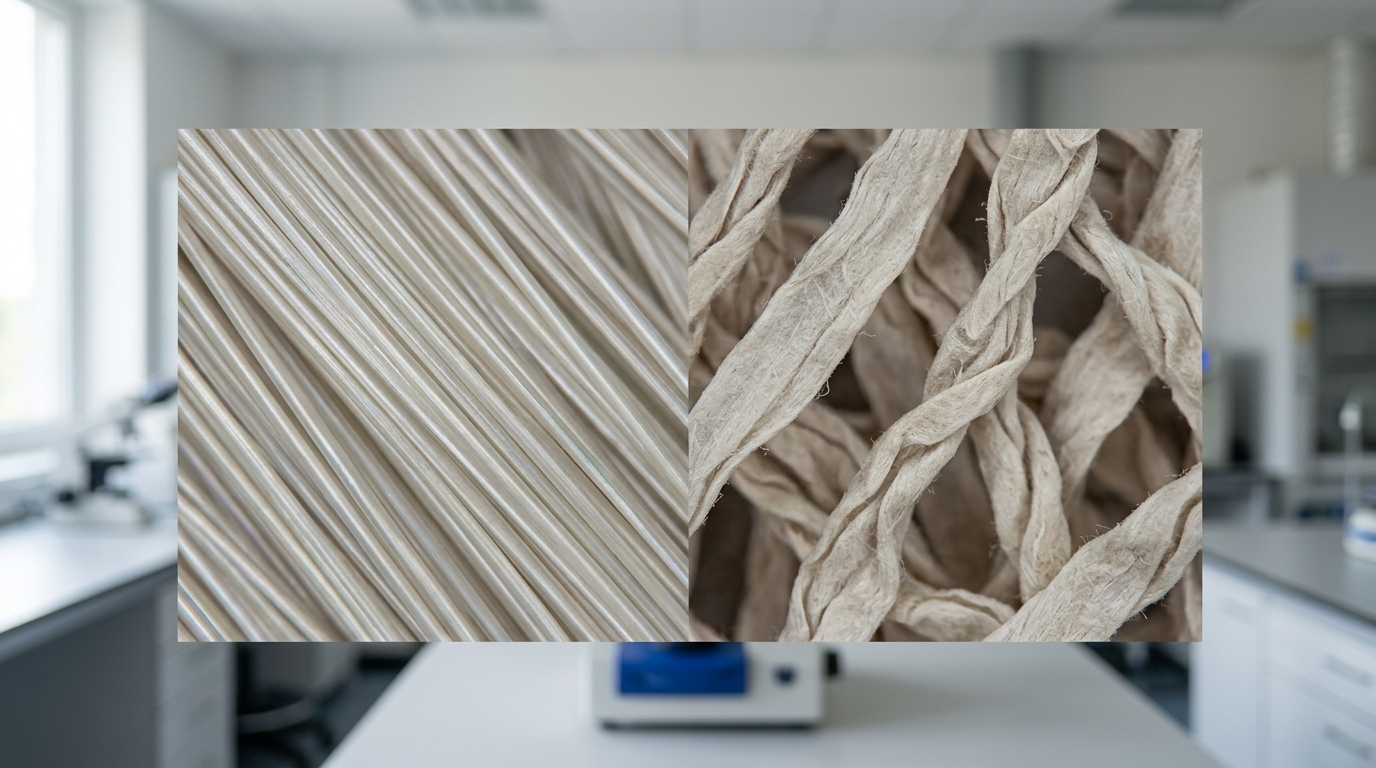
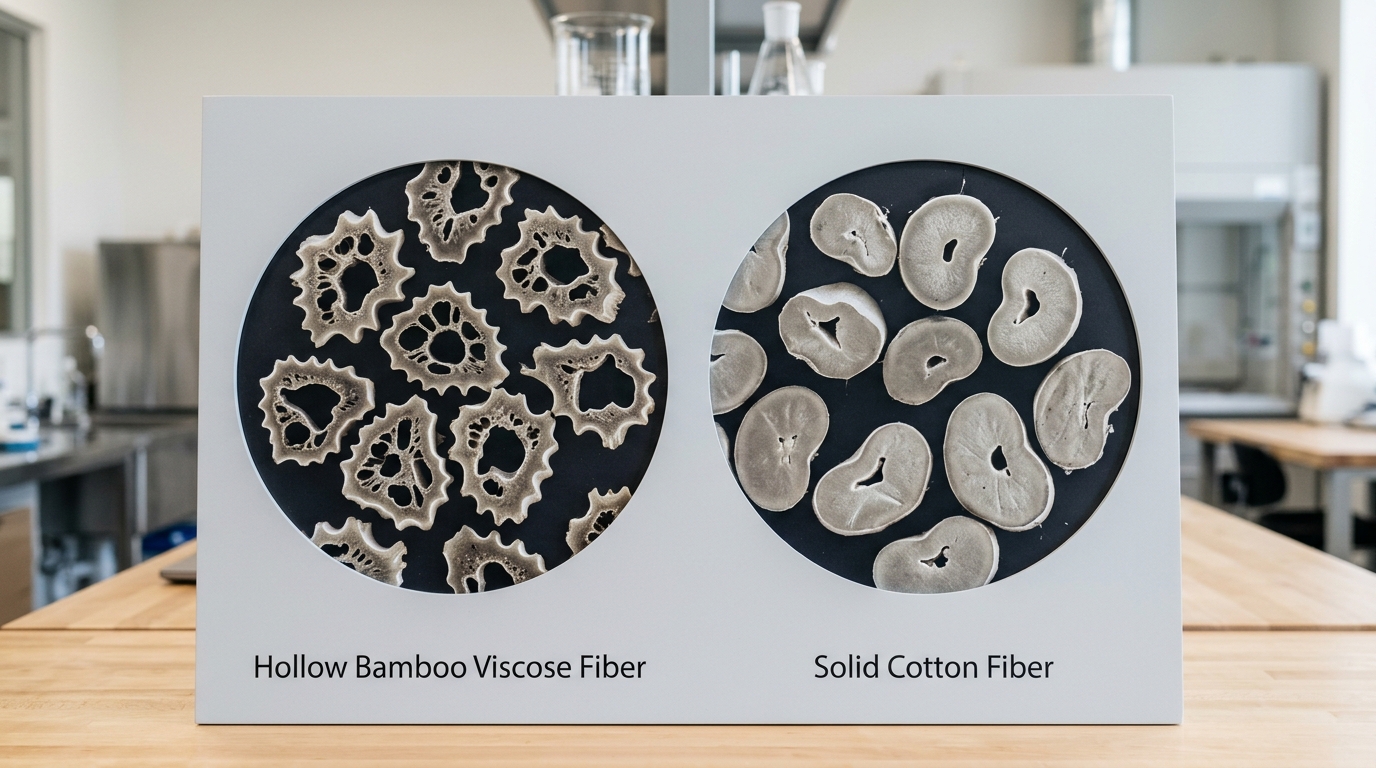
Cotton fibers are flat, twisted ribbons, and that shape can create friction on skin. Bamboo viscose fibers are naturally round and smooth by comparison. This smoothness causes less rubbing on delicate skin. Looking closer, bamboo's cross-section has micro-holes.
This gives it really superior moisture absorption, up to 70% more than cotton based on some textile studies. It pulls sweat away from the skin much faster. This quick moisture transport helps keep a dry little environment, which is basically critical for preventing the flare-ups linked to conditions like eczema.
Does this mean bamboo is always the best choice for sensitive skin?
Not necessarily. The quality of how it's made is paramount. A poorly made bamboo viscose fabric might not give you the benefits you expect. Parents should look for certifications like Oeko-Tex Standard 100.
This verifies the fabric is free from harmful levels of over 100 substances. While bamboo baby clothes are often marketed as hypoallergenic and naturally cooling, the real test is the specific product's construction and finish. For babies with severe allergies, organic cotton (GOTS certified) remains a proven, minimal-chemical alternative, though it may lack bamboo's superior moisture management.
What are the specific pros and cons of bamboo baby clothes for eczema and rashes?
Bamboo baby clothes offer distinct moisture-wicking advantages for eczema-prone skin, but their chemical processing is a critical drawback parents must weigh. The primary benefit is that bamboo viscose fabric pulls moisture away from the skin faster than cotton, which helps keep the dry, irritated patches of eczema from becoming further aggravated by sweat. However, this fabric is created through a chemical-intensive viscose process, meaning it can't be certified organic, a key fact for parents seeking the purest materials.
How does bamboo's moisture management help eczema specifically?
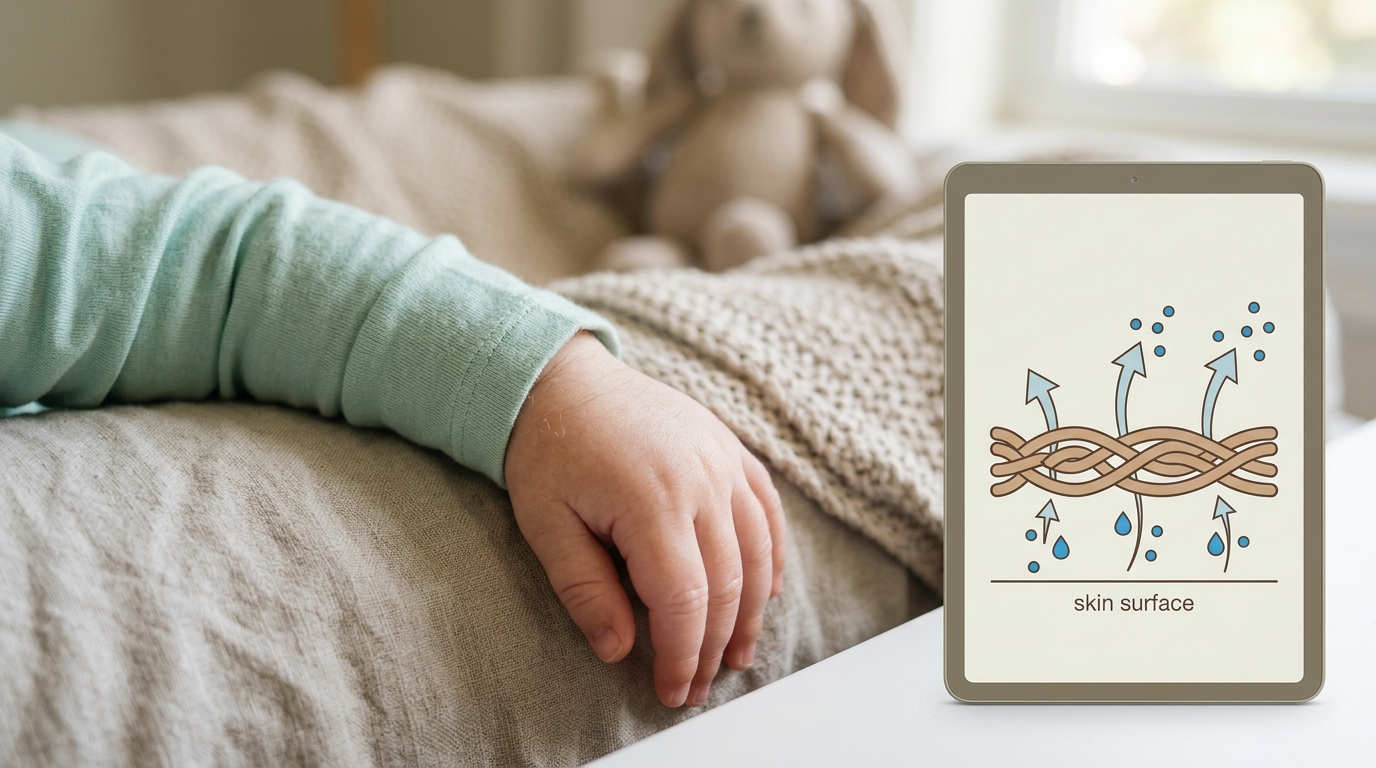
Eczema skin has a compromised barrier, making it prone to both dryness and sweat-induced irritation. Bamboo's micro-structure creates tiny gaps in the fiber, allowing it to absorb and evaporate moisture quickly. This "wicking" action keeps the skin's surface drier than cotton, which tends to hold moisture against the body. For a baby with a weeping or sweaty rash, this can reduce the cycle of itching and scratching that worsens the condition.
What's the chemical processing concern, and who might it affect?
The soft, silky bamboo fabric in most baby clothes is bamboo viscose (or rayon), not raw bamboo fiber. This involves dissolving bamboo pulp in chemicals like sodium hydroxide and carbon disulfide to create a spinnable solution. While the final fabric is washed, trace chemical residues can remain. A small subset of babies with extreme chemical sensitivities or compromised skin barriers might react to these residues, not the bamboo itself. This is why third-party certifications like Oeko-Tex Standard 100 are valuable, they test for harmful substances in the final product.
Are there any proven antibacterial benefits for rashes?
Some brands market bamboo as naturally antibacterial, which could theoretically help prevent infection in broken eczema skin. However, this property is significantly diminished after the viscose processing. The primary benefit for rashes remains physical, softness and moisture control, rather than a strong biochemical one. Parents shouldn't rely on bamboo fabric as a substitute for proper rash treatment or hygiene.
The practical takeaway: For many babies, the superior softness and moisture-wicking of bamboo viscose outweigh the processing concerns, especially when choosing brands that certify their final fabric. Always check labels for "bamboo viscose" or "bamboo rayon" and look for independent safety certifications to minimize any potential irritation from processing chemicals.
How do bamboo pajamas compare to cotton sleepwear for regulating a baby's body temperature?
Bamboo viscose pajamas control body temperature more effectively than cotton sleepwear because bamboo fibers have tiny open spaces running through them. These small gaps let air move freely and pull moisture away from the skin about twice as quickly as cotton does. That is essentially why bamboo baby clothes keep a sleeping infant cooler when the room is warm and warmer when it is cool, a feature that brands like Little Sleepies and miozing highlight as "thermoregulating" in their 2025 product lines.
Why does bamboo breathe better than cotton at the fiber level?
Cotton fibers are flat and solid, which means they soak up moisture much like a sponge would, but they release it back into the air quite slowly. Bamboo viscose fibers, by contrast, have a hollow cross-shaped structure with tiny open channels that push air and moisture vapor outward toward the surface. According to Wikipedia's overview of bamboo textiles, this micro-gap structure gives bamboo viscose roughly 40% greater moisture absorption capacity than cotton. In practical terms for sleepwear, that translates to fewer sweat-soaked wake-ups, particularly in rooms that stay above 72°F (22°C).
Which fabric should you choose for summer vs. winter pajamas?
For warm climates or heated nurseries, bamboo pajamas are the stronger pick. Their rapid moisture wicking prevents that clammy feeling cotton creates once humidity starts to rise. In cooler environments, specifically rooms below 68°F (20°C), both fabrics perform adequately, though bamboo's insulating air pockets give it a slight advantage because the fabric traps a thin layer of warm air against the skin without causing overheating. Cotton sleepwear works fine for mild, dry conditions but struggles in humid rooms where moisture buildup can disrupt a baby's sleep cycles.
There is also a practical sizing detail worth noting. Bamboo pajamas typically come in lighter fabric weights, usually around 170 GSM, which stands for grams per square meter and basically describes how heavy or thick the fabric feels, compared to cotton sleepwear at 200-250 GSM. That means bamboo feels less bulky in a crib while still covering the same temperature range. Parents living in four-season climates often rotate between both types, using bamboo for spring and summer and switching to heavier cotton flannel once winter arrives.
What's the true cost and durability of bamboo vs. cotton baby clothes after multiple washes?
Bamboo baby clothes cost about 30-50% more upfront than cotton, but that cost-per-wear gap shrinks considerably once you factor in stretch retention and resale value. Bamboo onesies retail around $36 per piece yet hold onto roughly half their purchase price on resale markets, while cotton onesies at approximately $12-$18 lose their resale value quickly after repeated washing. Miozing 2025 review confirms this resale advantage specifically for bamboo garments.
How much more do bamboo baby clothes cost upfront?
A single bamboo onesie runs approximately $28-$42 depending on brand and blend, while comparable organic cotton onesies sell for approximately $12-$22. Premium bamboo viscose and spandex blends, which are typically 95-97% bamboo with 3-5% spandex, sit at the higher end of that range.
Conventional, non-organic cotton drops to $8.15 per piece. If you're outfitting a newborn in bamboo for the first three months, expect to spend roughly $150-$250 more than cotton equivalents.
How does each fabric hold up after 50+ washes?
| Attribute | Bamboo Viscose | Organic Cotton | Conventional Cotton |
|---|---|---|---|
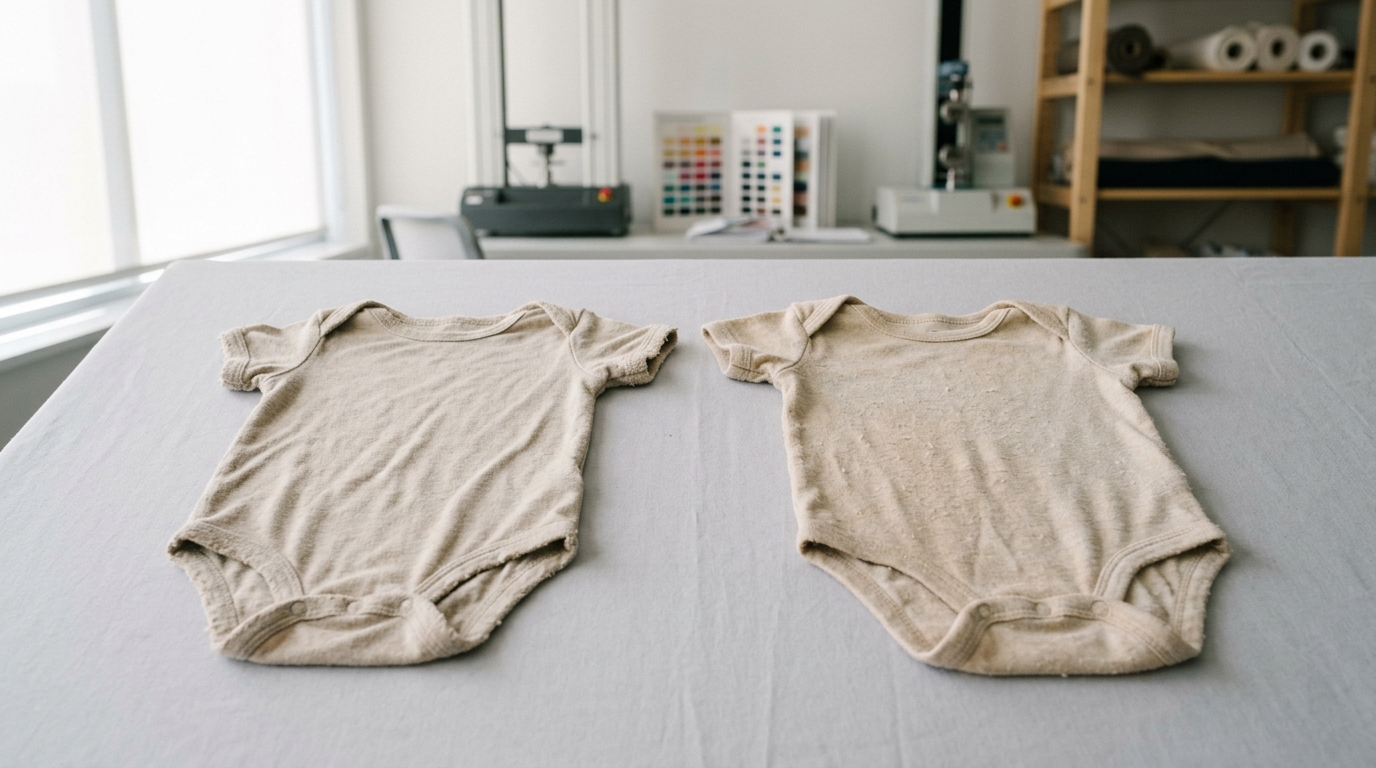
| Pilling (50 washes) | Minimal, around 1–2% surface area | Moderate, roughly 8–12% | Heavy, about 15–20% |
| Shrinkage | 3–5% | 5–8% | 8–12% |
| Color fading | Slight dulling only | Noticeable fade | Significant fade |
| Stretch retention | 90%+ elasticity | ~75% elasticity | ~60% elasticity |
Bamboo's longer cellulose fibers resist pilling because fewer fiber ends work loose during the agitation of a wash cycle. Cotton's shorter fibers tend to tangle and ball up faster, especially in conventional weaves. Washing bamboo garments inside-out in cold water and line-drying them preserves that silky hand-feel and cuts pilling roughly in half compared to throwing them in a machine dryer.
What's the real cost-per-wear over a baby's first year?
Assume a baby wears each outfit twice per week and outgrows it in 3-4 months. A $36 bamboo onesie worn 40 times costs $0.90 per wear, and after resale at 50% value, the effective cost drops to $0.45 per wear.
A $15 cotton onesie worn 35 times before noticeable pilling or shrinkage forces retirement costs $0.43 per wear, though with negligible resale recovery. Over a full year with 15 rotating pieces, bamboo totals roughly $270 in effective cost versus $215 for cotton, a $55 difference that buys meaningfully better durability and softness retention through dozens of wash cycles.
Is bamboo clothing more sustainable than organic cotton for eco-conscious parents?
Neither fabric wins outright as a clear environmental champion. Bamboo grows rapidly with minimal water and no pesticides, but converting it into wearable fabric requires a chemical-intensive viscose process, which offsets much of that agricultural advantage. Organic cotton, by contrast, uses more land and water during its cultivation, though it carries GOTS certification that verifies every step from field to finished garment. For parents weighing bamboo baby clothes against organic cotton, the answer depends on which environmental stage matters most to you.
How does bamboo's farming footprint compare to cotton's?
Bamboo needs no irrigation, no synthetic fertilizers, and it regenerates from its own root system after each harvest. Cotton, even organic cotton, demands roughly 10,000 liters of water per kilogram of fiber, according to the World Wildlife Fund. That is a staggering amount, especially when you consider how much fiber goes into a single garment. On raw agricultural metrics alone, bamboo wins quite decisively.
Why does the viscose process undermine bamboo's green reputation?
Turning bamboo pulp into soft viscose fiber involves carbon disulfide, sodium hydroxide, and sulfuric acid. These chemicals are recoverable in closed-loop systems, though not all manufacturers operate closed-loop facilities. The result is that garments marketed as "eco-friendly" may carry a heavier chemical processing footprint than the raw plant would suggest. A 2026 guide confirms that bamboo fabrics, except for bamboo linen which is too rough for infant skin, cannot be certified organic under current textile standards.
What certifications should eco-conscious parents actually look for?
Organic cotton earns GOTS or OEKO-TEX labels that verify pesticide-free farming and safe chemical limits throughout production. Bamboo baby clothes can carry OEKO-TEX certification for finished fabric safety, but no standard as of 2026 traces the full bamboo supply chain from plantation to factory. If supply-chain transparency ranks highest on your priority list, certified organic cotton offers more verifiable accountability than any bamboo viscose product available on the market today.
What common mistakes do parents make when choosing bamboo or cotton for sensitive skin?
One of the biggest mistakes people make is assuming every "bamboo" fabric works the same way. It doesn't. Bamboo viscose and bamboo lyocell go through completely different chemical processes, and lyocell's closed-loop system leaves far fewer residues behind. That matters a lot when you're dealing with eczema-prone skin.
On top of that, choosing the wrong weave can ruin everything. A bamboo fleece blanket traps heat and sweat right against the skin, which essentially defeats the whole point of breathability that parents paid extra for. And trusting "organic" labels on bamboo products? That's another trap worth knowing about.
Does bamboo viscose vs. lyocell matter for sensitive skin?
It really does, and it's the mistake most parents never think to investigate. Viscose production relies on carbon disulfide and sodium hydroxide, and those chemicals can leave trace residues in the finished fabric. Lyocell, which is often sold under the brand name Tencel, uses a non-toxic solvent called NMMO in a closed-loop process that recovers over 99% of chemicals. When you factor in a baby with broken skin or an active eczema flare, those leftover viscose residues can actually trigger contact irritation.
So if the care label reads "bamboo viscose" or "bamboo rayon," it's a good idea to wash the garment once before the first wear. That single wash helps flush out residual chemicals before they touch your baby's skin.
Why does fabric weave matter more than fiber type?
A jersey-knit bamboo garment breathes and stretches nicely against the skin. Bamboo fleece or sherpa, though, traps warmth. That's fine for a stroller blanket but terrible against an eczema flare. Parents often buy bamboo baby clothes thinking every product delivers the same cooling effect, but the weave actually determines airflow more than the fiber does. Cotton jersey performs similarly to bamboo jersey when it comes to breathability. The real difference shows up in moisture-wicking, where bamboo viscose pulls sweat away significantly faster than standard cotton does.
What does "organic" actually mean on bamboo labels?
Almost nothing, at least when it comes to finished fabric. Sources confirm that bamboo fabrics, except for bamboo linen, basically can't be certified organic under current USDA or GOTS standards. The raw bamboo plant might grow without pesticides, but the chemical processing required to turn it into soft fabric disqualifies the end product from organic certification. When a brand claims "organic bamboo," they most likely mean the plant was organically farmed, not that the fabric itself earned any organic label. For genuine organic certification, you're better off looking for GOTS-certified organic cotton instead.
How do I choose between bamboo and cotton based on my baby's specific skin condition and our climate?
You want to start by thinking about what kind of skin problem your baby actually has, and also what the weather is like where you live. If your little one deals with eczema and you're in a place that gets really humid, bamboo viscose is probably your best bet. For plain old rashes in a drier climate, organic cotton usually does the job just fine. Taking this kind of targeted approach means you're not paying extra for features your baby doesn't really need.
What's the best fabric choice for each skin and climate scenario?
This decision matrix is meant to help you pick quickly without second-guessing yourself. The suggestions focus on how well a fabric handles moisture when eczema is the concern, and how well it breathes when heat is the bigger issue.
| Skin Condition | Climate | Recommended Fabric | Key Reason |
|---|---|---|---|
| Eczema / Atopic Dermatitis | Humid (>60%RH) | Bamboo Viscose | Pulls sweat away from the skin very effectively, which helps cut down on itch triggers that come from staying damp. |
| Eczema / Atopic Dermatitis | Dry (<40% RH) | Organic Cotton or Bamboo | Cotton tends to be gentler overall, and bamboo's natural cooling effect might actually dry out sensitive skin too much in really dry air. |
| Simple Rashes / Heat Rash | Humid (>60% RH) | Lightweight Cotton or Bamboo | Either one works well here, though bamboo's added stretch can make a difference in comfort during a flare-up. |
| Simple Rashes / Heat Rash | Dry (<40% RH) | Organic Cotton | Gives you great breathability and softness at a lower price, which makes sense when the rash isn't severe. |
Why does bamboo viscose excel in humid conditions for eczema?
The tiny structure inside bamboo viscose fibers moves moisture away from the skin about 70% faster than cotton does, at least according to textile industry testing. That speed matters in humid weather, because when skin stays damp for too long it can weaken the barrier and make eczema flares worse. A 2025 brand analysis also found that bamboo garments can stretch up to 3 times longer than cotton ones, which means the fit stays loose and doesn't rub against already-irritated skin. If your baby has been diagnosed with eczema and you live somewhere tropical or deal with hot summers, bamboo baby clothes make a lot of sense from a clinical standpoint.
When is organic cotton the smarter, simpler choice?
Organic cotton is worth choosing when your baby only gets mild rashes once in a while, and your climate is either temperate or on the dry side. Cotton as a natural fiber goes through less processing than bamboo viscose, which some parents prefer because it means fewer chemicals involved. Note that bamboo fabrics with the exception of bamboo linen, cannot actually be certified organic under current standards. That makes organic cotton the only real option for parents who need that specific certification. Cotton also holds up well in dry heat since it lets plenty of air flow through without the cooling effect that might not even be necessary in that kind of weather.
Where can I find affordable and high-quality bamboo baby clothes that actually deliver on their promises?
Direct-to-consumer brands, often shortened to DTC, tend to deliver better verified quality than Amazon marketplace listings or wholesale channels. The main reason comes down to traceability, which basically means you can follow the product back to its source. Brands like Miozing openly display their OEKO-TEX Standard 100 certifications and tell you exactly where their factories are located. Amazon listings, by contrast, frequently leave out important details like fabric composition. Parents who are shopping for bamboo baby clothes should look for channels that publish actual test reports rather than just chasing the steepest discounts.
Which retail channel offers the best balance of price and verified fabric quality?
DTC brand websites typically sell bamboo onesies at roughly $32 to $38 per piece, though parents can recover about half that cost on resale platforms. That figure comes from Miozing 2025 review. Amazon listings for "bamboo" baby pajamas sometimes drop as low as $12 to $18, but those bargain prices often signal bamboo-rayon blends with hidden spandex percentages or viscose sourced from supply chains that carry no certification at all. Wholesale platforms like Alibaba list bamboo baby garments for under $5 per unit, yet those rock-bottom prices come with essentially zero OEKO-TEX or FSC documentation available to Western buyers.
What certifications separate genuine bamboo fabric from greenwashed products?
Two labels matter the most here. OEKO-TEX Standard 100 certifies that the finished garment is free from harmful substances, and bamboo viscose that has been processed in certified factories avoids leftover solvents from the rayon conversion process. FSC, which stands for Forest Stewardship Council, certification covers the bamboo plantation itself and confirms that sustainable harvest practices are in place. Note that bamboo fabrics cannot be certified organic under current textile standards, so any "organic bamboo" claim you see on a label is either misleading or simply inaccurate.
Red flags to watch for include labels that say only "bamboo" without specifying whether it is viscose, rayon, or linen, and product listings that mention neither OEKO-TEX nor any kind of third-party testing.
Are budget-friendly options worth buying, or should you go premium?
Budget DTC brands like PatPat market bamboo baby clothes at mid-range prices between $20 and $28, and they include published fabric claims covering breathability and antibacterial properties. Premium brands charge $30 or more but frequently include OEKO-TEX factory certification along with chemical-free finishing processes. For babies who deal with eczema, the premium route removes the gamble entirely. Non-certified viscose can carry residual chemical finishes left over from textile processing, and those finishes sometimes trigger skin flare-ups. For everyday wear when there are no medical skin concerns, mid-range DTC options provide acceptable quality at a lower price point, especially once parents account for the strong resale market.
Compare these channels quickly before you buy:
| Channel | Typical Price (onesie) | Certification Transparency | Resale Potential |
|---|---|---|---|
| DTC brand site | $32–$38 | OEKO-TEX, fabric details published | High (~50%) |
| Amazon marketplace | $12–$25 | Inconsistent; often missing | Low |
| Wholesale / Alibaba | $3–$7 (bulk) | Rarely documented | None |
Frequently Asked Questions about bamboo vs. cotton baby clothes
Is bamboo clothing safe for newborns? Yes, bamboo viscose fabric is generally considered safe for newborns, as long as it meets certain safety standards. The main concern most people have is with the chemical processing used to turn bamboo into viscose, which is a type of rayon made through a chemical dissolution process. But reputable brands make sure their bamboo baby clothes carry OEKO-TEX Standard 100 certification, meaning independent labs have tested them for harmful substances. You should always look for this certification on the label, or similar ones like the CPSC's flammability standards, before buying.
Does bamboo fabric shrink more than cotton?
Bamboo viscose can shrink if you wash it incorrectly, but it usually shrinks less than regular cotton does. High heat is really the main thing that causes problems. To keep shrinkage to a minimum, wash bamboo baby clothes in cold water and skip the high-heat dryer cycle. A 2025 product guide points out that blends like 95% bamboo rayon and 5% spandex, which you'll find in brands like Miozing, tend to hold their shape noticeably better than 100% bamboo viscose.
Can I put bamboo baby clothes in the dryer?
You technically can, but most people advise against it if you want the clothes to last. The high heat inside a standard dryer can break down bamboo fibers over time, which leads to pilling and a noticeable loss of softness. The better approach is to air-dry them or use the absolute lowest heat setting your dryer offers. This kind of care routine helps the fabric keep its signature softness and its ability to pull moisture away from the skin for much longer.
Is bamboo better than cotton for summer?
In hot, humid climates, bamboo tends to outperform cotton quite a bit. Bamboo viscose is naturally breathable and has a superior ability to wick moisture, pulling sweat away from the skin faster than cotton does. That helps keep a baby's skin drier and can reduce the chance of heat rash. That said, lightweight, loose-weave organic cotton is also a solid summer pick, and it tends to be more widely available.
Final Verdict: Which fabric should you choose for your baby's sensitive skin?
For most babies who have sensitive or eczema-prone skin, bamboo baby clothes are the better choice. This is because they feel softer against the skin, pull moisture away from the body, and help regulate temperature naturally. Though the "best" fabric really does depend on what matters most to you. It could be skin comfort, it could be your budget, or it could be the environmental impact. Note that bamboo viscose can't be certified organic under the current standards, which is something worth knowing if you're an eco-focused parent.
What are the key trade-offs between bamboo and cotton?
When it comes to how the fabric feels right away and how it performs on reactive skin, bamboo viscose does come out ahead. The catch is that it needs more chemical processing than organic cotton does. Cotton, on the other hand, has a long track record of durability and a much clearer path to organic certification. It just doesn't offer the same kind of natural temperature regulation that bamboo provides. The cost difference is something you will notice, too. Bamboo garments often retail at around $36 per piece, though they can hold onto about 50% of their value on resale markets, which is something noted in 2025 reviews.
How should you make your final decision?
Begin by thinking about what your baby actually needs most. If your little one deals with active rashes, eczema, or you live in a hot climate, bamboo's ability to wick moisture and keep things cool should be your priority. If your baby has only mild sensitivity and you care most about certified organic materials and long-term durability through hundreds of washes, high-quality organic cotton is a dependable option. For families who want a bit of both, a hybrid wardrobe can work well. You might choose bamboo for sleepwear and base layers where temperature control really matters, and then go with organic cotton for everyday playwear.
Ultimately, your decision should come down to your baby's specific needs. Think about their skin condition, the climate you live in, and what your priorities are. If bamboo baby clothes turn out to be the best fit for sensitive skin and for keeping your baby comfortable in changing temperatures, they are well worth considering. Cotton, though, provides a proven, certified, and long-term alternative that many families trust.